SE Ranking and Semrush both call themselves all-in-one SEO platforms, but they target very different buyers. Semrush is the established enterprise suite. SE Ranking is the leaner, cheaper challenger that covers most of the same ground. This head-to-head focuses on what actually matters when you sign up: the price, the data behind each tool, and who each one is genuinely built for.
Both vendors restructured pricing in late 2025 and 2026, so a lot of older comparison articles quote numbers that no longer exist. Everything below is sourced and current as of May 2026.
What is SE Ranking?#
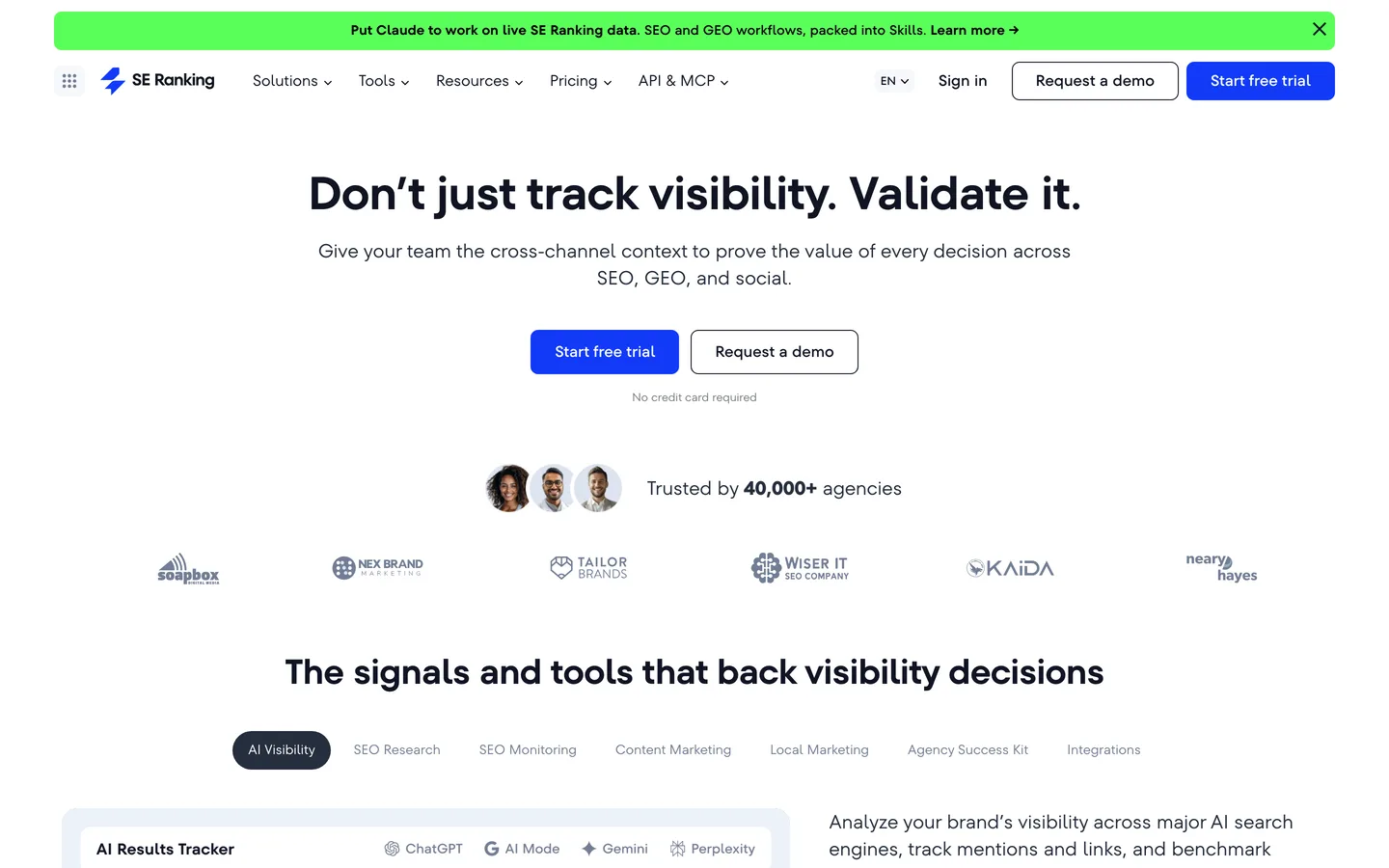
SE Ranking is a cloud SEO platform covering rank tracking, keyword research, competitor analysis, site audits, backlink monitoring, and AI content tools. It positions itself as a more affordable alternative to Semrush and Ahrefs, aimed at freelancers, small agencies, and in-house teams that want broad coverage without enterprise pricing.
In 2026, SE Ranking moved from its old Essential, Pro, and Business tiers to two main plans called Core and Growth. The legacy plans are no longer sold to new customers and stay active only for existing users (SE Ranking subscription page). If you read an article quoting a $39 or $65 starting price, it is referring to the discontinued structure.
Pricing in 2026: the honest numbers#
This is the section most people actually search for, so let me put the verified figures up front.
| Plan | Monthly billing | Annual billing (per mo) | Key limits |
|---|---|---|---|
| SE Ranking Core | $129/mo | $103.20/mo | 10 projects, 2,000 keywords/day, 100 AI prompts/day |
| SE Ranking Growth | $279/mo | $223.20/mo | 30 projects, 5,000 keywords/day, 3 seats |
| Semrush Pro | $139.95/mo | $117.33/mo | core SEO tools, small teams |
| Semrush Guru | $249.95/mo | $208.33/mo | historical data, content tools, multi-location |
| Semrush Business | $499.95/mo | $416.66/mo | API access, Share of Voice, high limits |
SE Ranking Core costs $129 per month billed monthly, dropping to $103.20 per month on annual billing, and includes 10 projects, 2,000 tracked keywords per day, and 100 AI prompts per day (SE Ranking pricing breakdown). The Growth plan runs $279 monthly or $223.20 on annual billing with 30 projects, 5,000 keywords per day, and 3 manager seats. Annual billing saves 20 percent on both plans (ClaroRank SE Ranking pricing).
Semrush Pro is $139.95 per month, Guru is $249.95, and Business is $499.95, billed monthly. Annual billing brings those down to roughly $117.33, $208.33, and $416.66 per month respectively, a discount of up to 17 percent (Demandsage Semrush pricing).
Free trial#
SE Ranking offers a fully functional 14-day free trial with no credit card, including up to 10 projects, 750 tracked keywords per day, 20 AI prompts per day, and AI competitive research for up to 3 domains (SE Ranking trial details). Semrush typically gates a trial behind a credit card and a shorter window, so SE Ranking is the lower-friction way to evaluate before paying.
Data and feature depth#
Price is only half the story. The other half is how much data sits behind each tool, and this is where Semrush still pulls ahead.
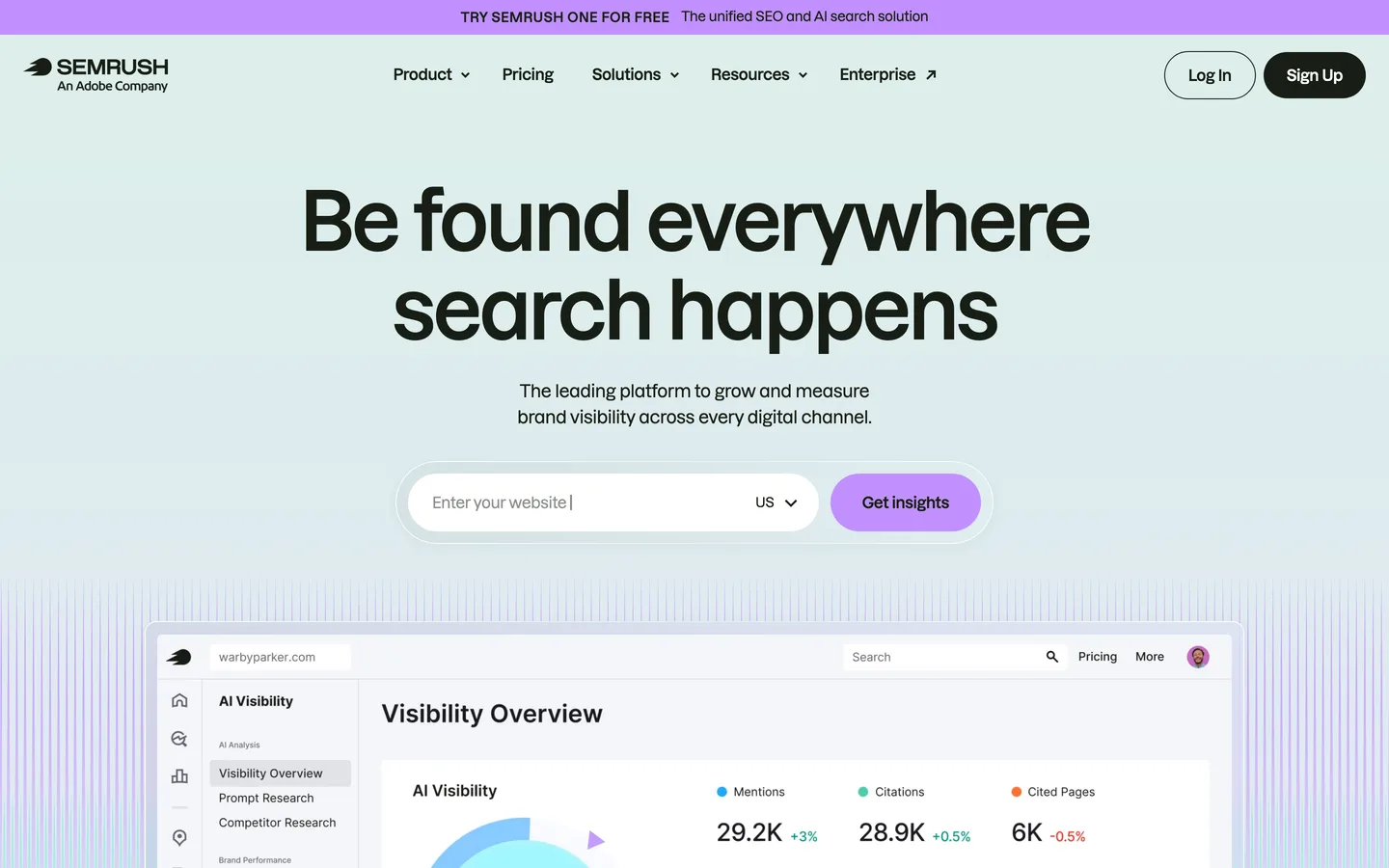
Semrush carries a keyword database of about 26.5 to 27.9 billion keywords across 142 locations, and a backlink index of 43 trillion backlinks from 390 million referring domains (Stacked Review Semrush statistics). Its platform spans 55-plus tools covering keyword research, site audit, rank tracking, competitor analysis, PPC research, content marketing, social media, and AI visibility tracking (Docket Semrush review).
SE Ranking's backlink database is materially smaller at around 3 trillion backlinks (Backlinko Ahrefs vs Semrush). For pure backlink research and competitive link analysis, Semrush is the stronger tool. SE Ranking covers the same categories of work, but with shallower link data and a smaller historical record.
Pros
- SE Ranking: far cheaper for high keyword-tracking volume
- SE Ranking: low-friction 14-day trial, no card
- SE Ranking: cleaner reporting for client deliverables
- Semrush: largest keyword and backlink databases in the comparison
- Semrush: 55+ tools including PPC, social, and AI visibility
- Semrush: deeper historical and competitive data
Cons
- SE Ranking: backlink index ~3T vs Semrush ~43T
- SE Ranking: less mature competitive and historical data
- Semrush: Business tier hits $499.95/mo billed monthly
- Semrush: breadth can overwhelm small teams
- Semrush: some features locked to higher tiers
AI features in 2026#
Both tools added AI layers. Semrush launched its AI Visibility Toolkit in October 2025, tracking brand mentions and citations across ChatGPT, Google AI Overviews, Perplexity, and Gemini, plus a Semrush MCP Server in 2026 with 50,000 API units per month included for Pro, Guru, and Semrush One subscribers (behindrankings Semrush vs Ahrefs). SE Ranking includes AI prompt-based research and content tools metered by the per-day prompt limits noted above. Semrush's AI visibility tracking is the more developed of the two if generative-search visibility is a priority for you.
Who each tool is for#
Choose SE Ranking if you are a freelancer or small-to-mid agency, you track a lot of keywords across multiple client projects, and you want broad SEO coverage without paying enterprise prices. The 2,000 keywords per day on Core is generous for the money, and the reporting is built for handing results to clients. Start with the SE Ranking guide for a deeper feature walkthrough.
Choose Semrush if you need the deepest backlink data, mature competitive intelligence, PPC and social tooling in the same suite, or serious AI-visibility tracking, and your budget can absorb the higher tiers. It remains the safest pick for larger marketing teams. See the Semrush guide for the full breakdown.
A third option: if your real goal is content that ranks rather than platform breadth, a dedicated content optimizer like Surfer SEO pairs well with either tool. Many teams run SE Ranking for tracking plus Surfer for on-page work, which still costs less than Semrush Business. The Surfer SEO guide covers how that fits together.
The verdict#
SE Ranking wins on price-to-volume and ease of entry. Semrush wins on data depth, breadth, and competitive intelligence. Neither is objectively better: the right choice depends on whether your constraint is budget and tracking volume (SE Ranking) or data depth and feature range (Semrush). If you are unsure, the no-card SE Ranking trial is the cheapest way to find out, and you can layer Semrush on later if you outgrow it.
For more options, browse our SEO tools category or the full tools directory.