The wave, and why most comparisons are useless#
Between early April and mid-May 2026, the major labs shipped a remarkable number of frontier and near-frontier models. Trackers counted roughly 19 notable releases in a single 30-day window, with OpenAI, Anthropic, Google, Meta, DeepSeek, Alibaba and others all moving at once.
Most "X vs Y vs Z" posts you will find about this wave are useless for one reason: they quote benchmark numbers from pages that never link to a primary source. So before anything else, a rule for this post. Every hard number below comes from the model provider's own announcement, their docs, or Artificial Analysis, which runs a consistent independent test suite. Where I could not verify a number, I say so instead of inventing one.
This is not a leaderboard. For a solo business or a small team, the question is never "which model has the highest score". It is "which model does my specific work well enough, at a price I can defend". Those are different questions.
Quick comparison#
| GPT-5.5 | Claude Opus 4.7 | Gemini 3.5 Flash | |
|---|---|---|---|
| Released | 23 Apr 2026 | 16 Apr 2026 | 19 May 2026 |
| API price (in / out, per 1M tokens) | $5 / $30 | $5 / $25 | $1.50 / $9 |
| Positioning | Frontier generalist, top of the index | Long-horizon agentic + knowledge work | Fast, cheap, high-volume |
| Notable | Tops Artificial Analysis Intelligence Index | First Claude with high-res image input | Cheapest of the three by far |
Prices as of 25 May 2026. Always check the provider's pricing page for current rates: OpenAI, Anthropic, Google.
GPT-5.5: the new ceiling, at a new price#
OpenAI released GPT-5.5 on 23 April 2026. The headline is performance: GPT-5.5 (xhigh) currently leads the Artificial Analysis Intelligence Index with a score of 60, ahead of the rest of the field. OpenAI reports SWE-bench Verified around 88.7%, up from roughly 74% on GPT-5.4, and claims a net Intelligence-Index gain of about 20% once token efficiency is factored in.
The second headline is the bill. GPT-5.5 costs $5 per million input tokens and $30 per million output tokens, which OpenAI set by roughly doubling the per-token output price of the GPT-5 line. There is also GPT-5.5 Pro at $30 / $180 for parallel-reasoning workloads, and a lighter GPT-5.5 Instant variant that arrived on 5 May.
Where it fits: GPT-5.5 is the model to reach for when correctness on a hard, well-defined task matters more than cost. Complex coding, computer-use agents, dense analytical work. The Pro tier is a specialist tool, not a daily driver. For a small business, GPT-5.5 is best used selectively, not as the default model behind every feature, or the output cost will surprise you.
Claude Opus 4.7: built for agents, honest about its ceiling#
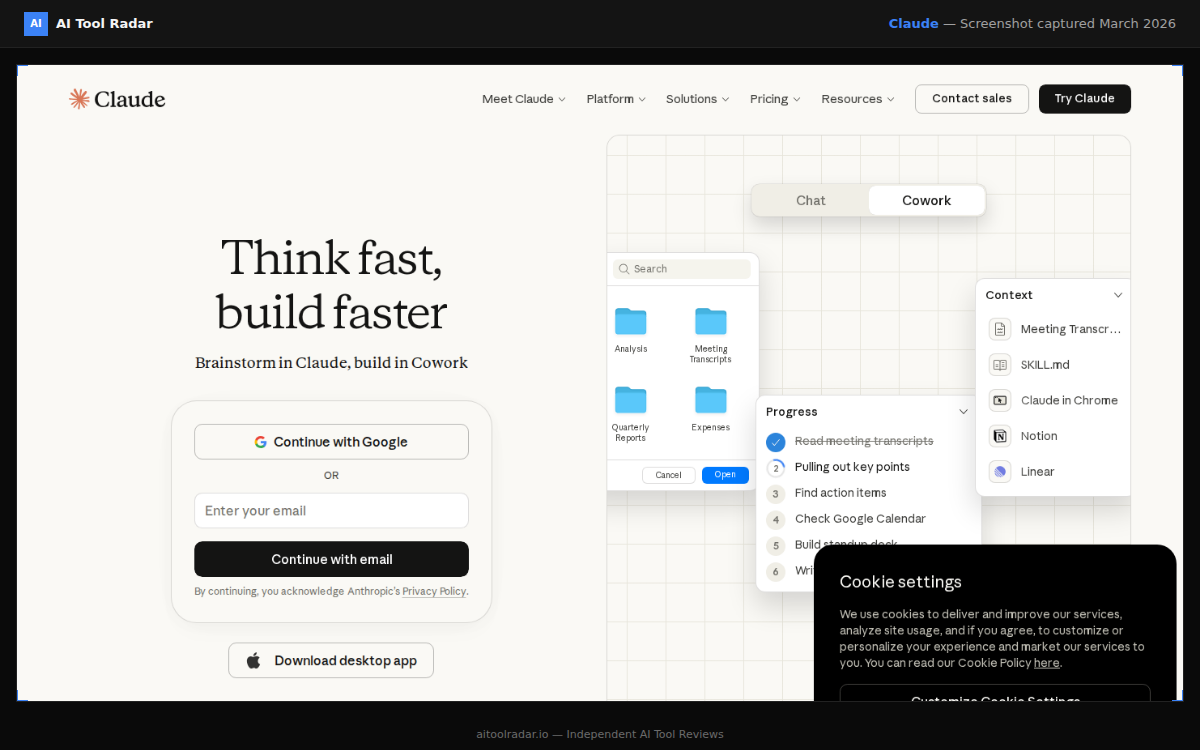
Anthropic released Claude Opus 4.7 on 16 April 2026. It is Anthropic's most capable generally available model to date, and the company was unusually candid at launch: it conceded that Opus 4.7 trails an unreleased internal model codenamed Mythos, which it held back as the lower-risk option to ship.
The verified gains over Opus 4.6 are solid rather than spectacular: SWE-bench Verified 87.6% (up from 80.8%), Terminal-Bench 2.0 69.4%, GPQA Diamond 94.2%, and Finance Agent 64.4%. On the Artificial Analysis Intelligence Index it scores 57. It is also the first Claude with high-resolution image input, raising the maximum to 2576px / 3.75MP, which matters if you feed it screenshots, documents or diagrams.
Pricing stayed at $5 / $25 per million tokens, the same as Opus 4.6. One catch worth knowing: Opus 4.7 ships with an updated tokenizer that can map the same input to roughly 1.0–1.35x more tokens, per Anthropic's own model notes. So your real cost per request can rise even though the sticker price did not.
Where it fits: Opus 4.7 is the strongest pick for long-running agentic work, multi-step planning, and knowledge tasks where the model has to hold a lot of context and stay coherent. If you are building an assistant that takes actions over many steps, this is the safe default.
Gemini 3.5 Flash: the cost play#
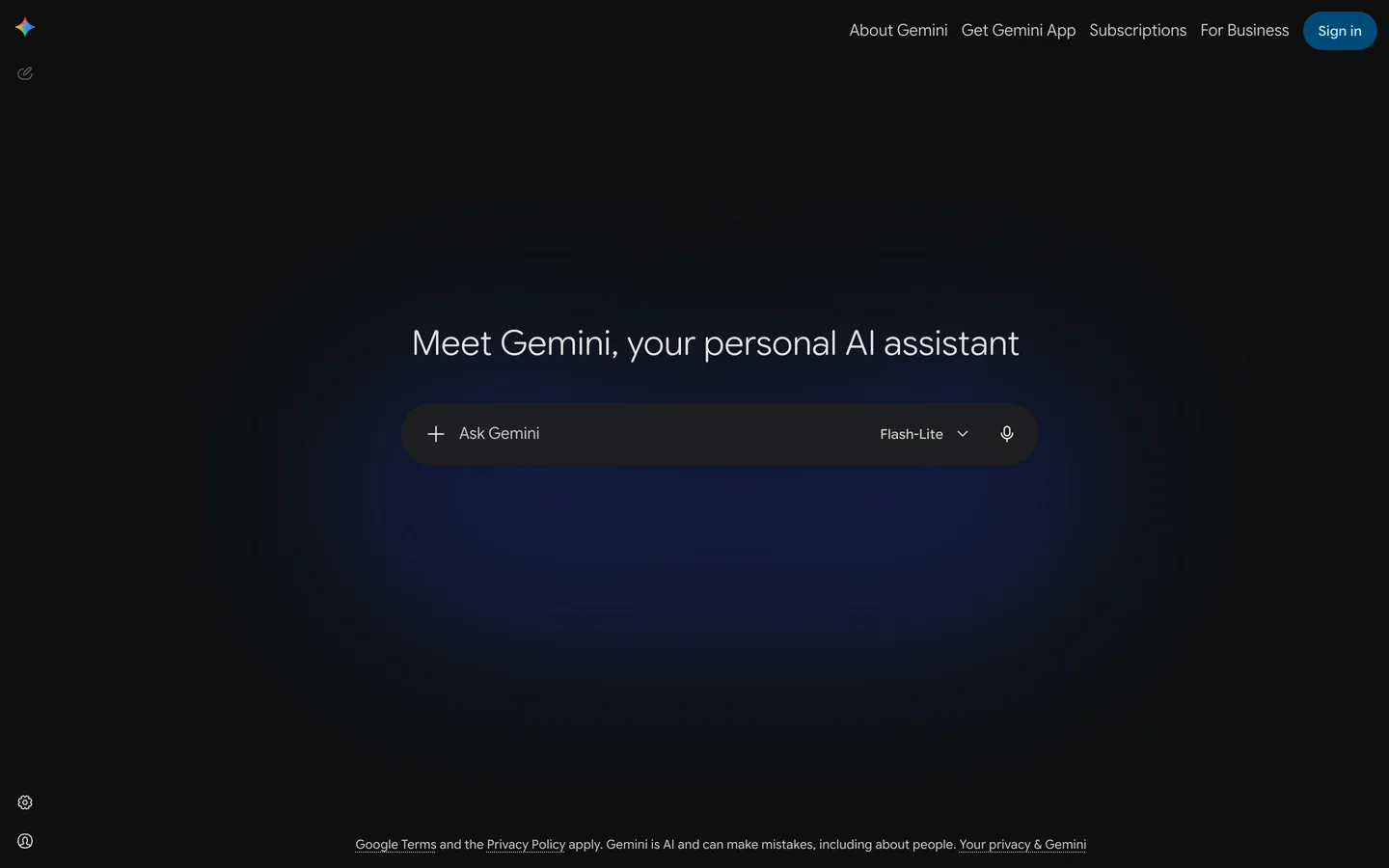
Google's most recent move on this list is Gemini 3.5 Flash, released 19 May 2026 as a lightweight, fast model. It is priced at $1.50 input / $9 output per million tokens, by far the cheapest of the three here, and it lands alongside Google's broader "agentic era" push (the Gemini Spark agent, the Omni world model, and Gemma 4 on the open-weight side).
Note the naming carefully: as of late May 2026, the new flagship on the Gemini side is the Flash tier. For top-end reasoning, Artificial Analysis still lists Gemini 3.1 Pro Preview, which scores 57 on the Intelligence Index at $2 / $12 per million tokens. There is no independently verified "Gemini 3.5 Pro" score I could confirm at the time of writing, so treat any such number you see elsewhere with suspicion.
Where it fits: Flash is the volume model. Classification, extraction, summarisation, chat over large document sets, anything you run thousands of times where each call must be cheap. At a tenth of GPT-5.5's output price, it changes what is economically possible for a small team.
Who should use what#
There is no single winner, and anyone who tells you there is has not priced out a real workload. A practical split:
- Hard, high-stakes single tasks (a tricky bug, a dense legal or financial analysis): GPT-5.5. Pay for the ceiling when getting it right once is worth more than the token cost.
- Agents and long multi-step work: Claude Opus 4.7. Coherence over many steps is its strongest trait, and the high-res vision helps for document and screenshot workflows.
- High-volume, cost-sensitive work: Gemini 3.5 Flash. When you call the model thousands of times, the price gap dominates everything else.
A pattern worth copying from larger teams: route by task, not by loyalty. Use a cheap model for the 80% of calls that are easy, and escalate to a frontier model only for the hard 20%. The savings are large and the quality loss is usually invisible.
The honest caveat on benchmarks#
Every number in this post is real and sourced, but a benchmark is not your workload. SWE-bench is not your codebase. An Intelligence Index is an average across ten evaluations, not a prediction of how a model handles your prompts, your data, your edge cases. The labs optimise hard for the tests that get cited.
The only benchmark that matters for your business is your own: take your three or four most common tasks, run them through two or three of these models, and compare the output and the cost. That afternoon of testing will tell you more than any leaderboard, including this one.
Sources#
- OpenAI GPT-5.5 pricing and release: apidog pricing breakdown, LLM-Stats model updates
- Claude Opus 4.7 release and benchmarks: Anthropic announcement, Anthropic model notes, CNBC on Opus 4.7 vs Mythos
- Gemini 3.5 Flash and Google's agentic releases: CNBC on Google AI Ultra, Gemini Spark and Omni
- Independent benchmarks and Intelligence Index: Artificial Analysis