Lindy holds a 4.9/5 rating across roughly 170 reviews on G2, including a "Best Personal AI Assistant" nod. The same product sits at 1.7/5 on Trustpilot. That is not a data error, and it is not review manipulation. Both numbers are accurate, and understanding why tells you more about buying AI tools in 2026 than either score on its own.
What Lindy actually is#
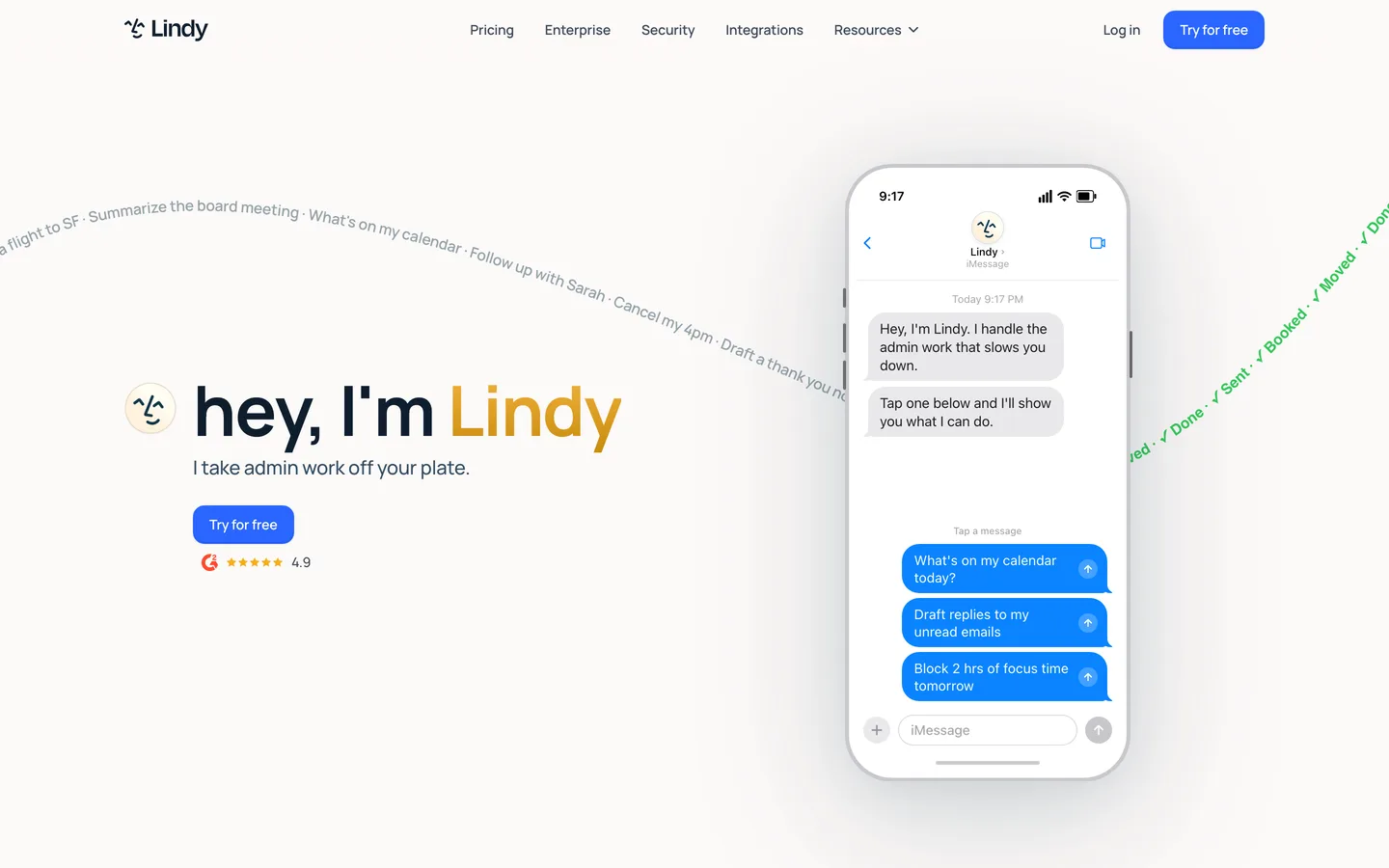
Lindy is an AI executive assistant: it triages your inbox, drafts replies in your voice, joins meetings and writes the follow-up, coordinates scheduling, and updates HubSpot or Salesforce with call context. Underneath sits a no-code agent builder with 100+ templates, so the same platform that answers your email can also run lead qualification or support triage. You can delegate to it over iMessage or SMS without opening an app.
The product side of this story is strong. Ease of use is the most-cited strength on G2 with 125 mentions across those 170 reviews, and a detailed practitioner review on r/AI_Agents summarized the platform as "mostly just works." Independent testers report ROI within three months. This is what the 4.9 measures: people who use Lindy daily find it genuinely capable.
What the 1.7 measures#
Trustpilot reviews barely talk about features. They talk about invoices.
The pattern in the complaints is consistent: credit-based metering where simple actions cost roughly 1 credit but email parsing, web research, or multi-step workflows burn 5-10+ per execution, per-step costs that are only visible after execution, overage charges that surprised users (one reported case ran to $550), and a cancellation process that required contacting support instead of clicking a button.
Two more facts sharpen the picture. Lindy discontinued its 400-credit free plan in early 2026, so the entry price is now $49.99/month after a 7-day trial. And billing is monthly only, with no annual discount. In G2's complaint tallies, "expensive" tops the list at 42 mentions, ahead of subscription cost at 35.
So the split is not product versus scam. It is product versus pricing model. G2 reviewers evaluate what Lindy does; Trustpilot reviewers document what it costs when usage does not match expectations. We covered this pattern across the industry in our piece on the hidden costs of credit-based AI tools, and Lindy is currently the clearest example of it.
Why this pattern will spread#
Lindy's pricing problem is structural, not accidental. An agent that reasons through a task consumes wildly different compute depending on the task, the model, and the context it carries. Flat-rate pricing forces the vendor to eat that variance; credit pricing hands it to the customer. As more tools ship autonomous agents, more of them will land on usage-based models, and more of them will inherit exactly this rating split: high scores from feature reviewers, low scores from invoice reviewers.
The lesson for buyers is to treat the two review streams as two different questions. G2 answers "does it work?" Trustpilot answers "will the bill surprise me?" For agentic tools, you need both answers before you commit.
How to trial Lindy without getting burned#
If the feature set fits your workload, the 7-day trial is genuinely useful because it includes full Plus features without a credit card. Use it against your real inbox and your real meeting load, not a toy scenario. Check the usage meter every day, because per-step costs only appear after execution. Extrapolate your week to a month before the trial ends, and if the math lands above the Plus allotment, price in Pro at $99.99 rather than assuming you will stay under the limit.
Our full breakdown of plans, credits, integrations, and the honest pros and cons is in the Lindy guide.