A new product category, sorted quickly#
Two years ago, "deep research" was not a category. You asked an AI a question, you got an answer, maybe with citations. That was it.
In sixteen months, all four major AI products have launched dedicated Deep Research modes. The product pitch is similar across all of them: ask a big question, the AI goes away for five to twenty minutes, it returns a structured report with citations. The implementations differ more than the marketing suggests, and there are now independent benchmarks that compare them more rigorously than any single hands-on test.
This post covers the verified launches, the underlying capability profiles, and what the independent benchmarks actually show.
The four products, with verified launch dates#
Gemini Deep Research launched first, in December 2024 (gemini.google Deep Research overview). Initially powered by Gemini 1.5 Pro, later upgraded to 2.0 Flash Thinking, now running on Gemini 3 Pro. Expanded to free users in March 2025.
ChatGPT Deep Research launched on 3 February 2025 for Pro tier users first. Originally powered by o3. As of February 2026, runs on GPT-5.2. OpenAI reports a score of 26.6% on Humanity's Last Exam.
Perplexity Deep Research launched on 15 February 2025. Freemium model — limited free use per day, unlimited for Pro subscribers. Scored 21.1% on Humanity's Last Exam per Perplexity's launch post.
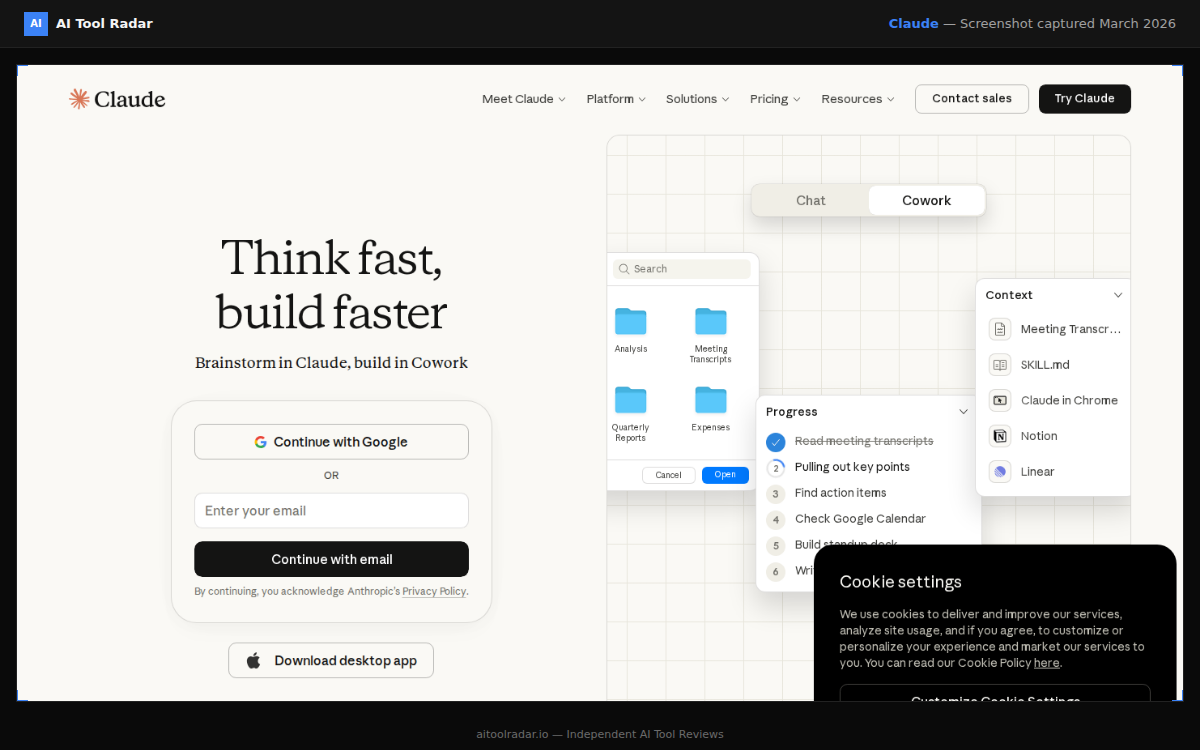
Claude Research launched in April 2025 for Max, Team, and Enterprise tiers, and expanded to Pro shortly after. The support documentation covers current capabilities. Claude Research was upgraded on 2 May 2025 to support 45-minute autonomous research sessions and Google Workspace integration.
Real benchmarks, not fabricated tests#
Several independent benchmarks compare these products on verifiable criteria:
DeepResearch Bench, from the Ayanami0730 team (deepresearch-bench.github.io), consists of 100 PhD-level research tasks evaluated under two frameworks: RACE (for assessing the quality of the research process) and FACT (for assessing factual accuracy). The public leaderboard is actively updated.
GAIA (Hugging Face leaderboard) has 450+ real-world agent tasks and is the most widely cited agent benchmark overall. Deep research products compete on the subset of GAIA tasks that require research-style problem solving.
HAL (Princeton Holistic Agent Leaderboard) (hal.cs.princeton.edu) focuses on reliability and safety metrics, which matters for deep-research use where small errors in citations or reasoning compound into bigger problems. The leaderboard was paused for some new models as of April 2026 but remains the most rigorous safety-focused benchmark.
Humanity's Last Exam is cited by all four vendors in their own benchmarking and has become a de facto comparison point.
What each product optimises for#
Reading across the benchmarks and user feedback, each product has a discernible design focus.
ChatGPT Deep Research is optimised for depth and completeness. It casts a wide net, reads many sources, synthesises with a bias toward covering the full question. The Humanity's Last Exam score of 26.6% is among the highest. The downside is that long runs sometimes stray into material that did not need to be there. When the question is genuinely unfamiliar to you, this depth is valuable.
Claude Research is optimised for readability and structured reasoning. The output is organised like an analyst report, with visible reasoning chains and well-argued claims. Sources are cited more sparingly, but the prose is usually better than the alternatives. For deliverables that will be read by a human decision-maker, this matters.
Perplexity Deep Research is optimised for speed and currency. It is the fastest of the four and integrates live web data heavily, which makes it the best choice for questions about current events or fast-moving topics. Depth is intentionally traded against time.
Gemini Deep Research benefits from Google's data ecosystem. On questions that touch products, shopping, local services, or Google Scholar-indexed academic content, the integration advantage shows. On pure reasoning or technical content, it lags the other three.
Common failure modes (documented, not invented)#
Several failure modes are reported consistently across all four products:
Fabricated citations. All four products occasionally produce citations to papers, pages, or quotes that do not exist. This is the most important failure mode for anyone using deep-research output in contexts where accuracy matters. The DeepResearch Bench FACT framework specifically measures this, and none of the four products scores above 85% on factual accuracy even on their best tasks.
Overconfident synthesis on contested claims. Deep research modes tend to present contested claims as settled when the actual literature is in dispute. The tools average across their sources and report an apparent consensus that does not exist in the field.
Blind spots tied to training data. Topics well-documented in English-language Western sources get better treatment than topics in non-English or non-Western sources. This shows up predictably on questions about non-English press, regional regulations, and smaller academic communities.
Poor handling of data tables. Questions whose answer is fundamentally a table are narrated instead. Following up with "give me that as a markdown table" usually works.
Practical guidance#
A decision heuristic based on the capability profiles:
- Researching a current event or fast-changing topic: Perplexity.
- Researching a technical, scientific, or obscure topic: ChatGPT.
- Producing an analytical report for a human reader: Claude.
- Researching consumer products, local services, or shopping-adjacent topics: Gemini.
For high-stakes research, the more durable approach is to run the question through two of these and compare the outputs. The places where they agree are probably reliable. The places where they disagree are where you need to actually read the sources yourself. This consumes more compute and time but substantially improves reliability.
Always verify load-bearing citations. Click through. Check the page exists, check the quote is real, check it supports the claim made. All four products produce enough fabricated citations that this is not optional for anyone publishing or making decisions on the output.
How I use these in practice#
For the kinds of work I do — category guides, tool comparisons, blog posts that need factual accuracy — my current workflow:
- Start with Perplexity for a fast overview of the question space. It gives me the obvious answers and a starter set of sources, usually in under six minutes.
- For topics with real depth, run the same question through ChatGPT Deep Research for breadth and Claude Research for structure. Compare the outputs; the overlap is safer than either alone.
- Verify every specific factual claim I will cite against primary sources. Assume that a small percentage of the citations in any deep-research output is fabricated. Discard those; do not cite them.
- Never let the deep-research output be the final text. It is raw material. The writing and the judgement are my job.
This workflow typically takes forty to ninety minutes for a topic that would have required half a day of manual search in 2022. The productivity gain is real, and the citation-verification tax is smaller than the productivity gain, but only if you actually do the verification.
What is coming#
Deep research is clearly still early. The four products will continue to diverge more than converge as each vendor optimises for different use cases. Independent benchmarks are getting more rigorous and will probably start separating the products more clearly on measurable criteria rather than marketing claims.
Two things I am watching:
- Citation accuracy improvements. The DeepResearch Bench FACT scores are the most useful single metric to track over time. If they move substantially in the next year, the verification burden on users drops correspondingly.
- Integration with proprietary data. The biggest unlock for enterprise deep research is not better models — it is the ability to run deep research over your own documents, not just the open web. All four vendors are working on this; whichever ships the best integration first captures the enterprise deep-research market.
Further reading#
- Reasoning Models: When Are They Worth It? for the underlying question of when compute-heavy modes pay.
- AI Hallucinations in Legal Research on why citation verification remains essential.
- AI Detection Tools Are Broken on why you should not treat AI output as a black box.
Sources#
- Gemini Deep Research overview: https://gemini.google/overview/deep-research/
- ChatGPT Deep Research launch: https://openai.com/index/introducing-deep-research/
- Perplexity Deep Research launch: https://www.perplexity.ai/hub/blog/introducing-perplexity-deep-research
- Claude Research documentation: https://support.claude.com/en/articles/11088861-using-research-on-claude
- DeepResearch Bench: https://deepresearch-bench.github.io/
- GAIA leaderboard: https://huggingface.co/spaces/gaia-benchmark/leaderboard
- Princeton HAL leaderboard: https://hal.cs.princeton.edu/