The race that split into lanes#
In early 2023, AI image generation had three visible competitors: Midjourney, Stable Diffusion, and DALL-E 2. Each was generic enough that you could reasonably ask "which is best?" and get an argument, not a clear answer. The expectation was that one would pull ahead and the others would fade.
What happened instead is that the category split. By 2026, there are maybe six tools that actually matter, each dominant in a different niche. Here is the verified 2026 map with current products, dates, and who ate whose lunch.
Midjourney: editorial and brand imagery#
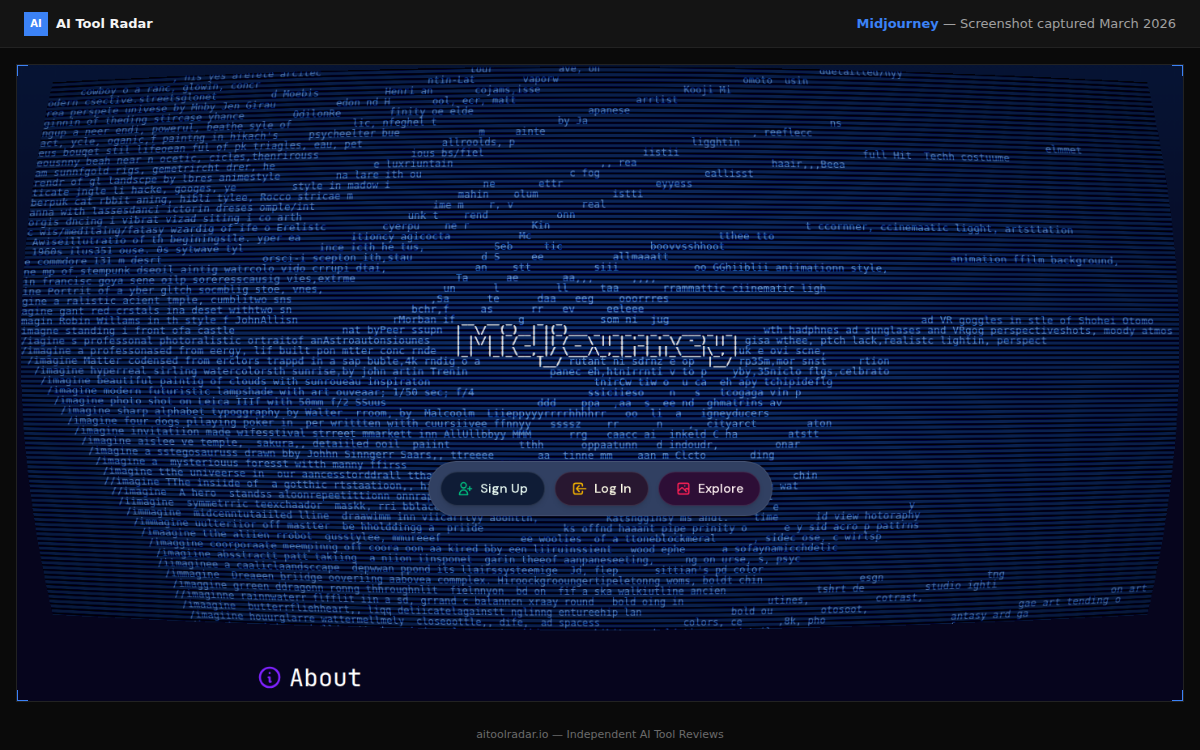
Midjourney v7 launched 3 April 2025 and became the default version on 17 June 2025. Pricing is tiered at $10 Basic, $30 Standard, $60 Pro, and $120 Mega per month.
The product has matured into the default for brand, editorial, and hero imagery. The Niji models serve illustration work. The Discord-native interface people complained about in 2023 is still there but has been joined by a web app. For a particular category of work — campaign hero shots, magazine-style illustrations, anything where the look feels curated — Midjourney remains the tool most professional designers reach for first.
Flux and Black Forest Labs: the open-source incumbent#
Black Forest Labs was founded 1 August 2024 by Robin Rombach, Andreas Blattmann, and Patrick Esser — the creators of Stable Diffusion who left Stability AI. They raised $31 million in seed funding from Andreessen Horowitz.
Flux.1 shipped in August 2024, followed by Flux 1.1 Pro later that year and Flux.1 Kontext in June 2025. The models compete directly with closed frontier models on quality while remaining open-weight for Flux.1 Dev. Flux is now the default open-source image model for anyone running locally or on GPU rental services — a position that Stable Diffusion held in 2022 and 2023 before losing it.
The team that left Stability won the open-source category from the company they left. That is the concise version of one of the most dramatic talent-migration stories in AI.
OpenAI: DALL-E retired, gpt-image took over#
OpenAI launched native GPT-4o image generation on 25 March 2025, replacing DALL-E 3 in ChatGPT. The API model gpt-image-1 launched 23 April 2025, followed by gpt-image-1-mini on 6 October 2025 at OpenAI DevDay, and gpt-image-1.5 on 16 December 2025.
DALL-E 3 is scheduled for deprecation from the API on 12 May 2026. So the "DALL-E won the category by ChatGPT integration" story from 2024 is now technically wrong — DALL-E is being retired. What remains is OpenAI's image generation inside ChatGPT, which is the most-used AI image tool in absolute terms by virtue of ChatGPT's user base, not because the model beats the specialists.
For serious design work, almost nobody uses the ChatGPT image generator. For a throwaway visual while you are already in ChatGPT, it is the path of least resistance.
Adobe Firefly: the commercially-safe option#
Adobe announced Firefly Image Model 4 and Image Model 4 Ultra on 24 April 2025 at Adobe MAX London. The models now deliver 2K resolution with improved prompt fidelity. More importantly, Firefly is deeply integrated into Photoshop, Illustrator, and the rest of the Creative Cloud suite.
The entire Firefly pitch is that it was trained on licensed and permissible content, which means commercial customers can use the output without the copyright exposure that hangs over models trained on scraped web data. That pitch turned out to match exactly what enterprise buyers wanted, and Firefly has become the default for anyone working inside Adobe workflows on client-facing output.
Stability AI: survived but not the leader anymore#
Stability AI is still alive in 2026 under CEO Prem Akkaraju, who took over in June 2024 after the company's funding crisis. The $80 million new investment plus roughly $100 million of debt forgiveness kept them operational. Tracxn data lists 191 employees as of March 2026.
Investors now include Eric Schmidt, Sean Parker, and Coatue. The company is functional, but the open-source leadership that was their identity has moved to Black Forest Labs. The legacy SDXL ecosystem of LoRAs, ControlNets, and fine-tunes is still alive and still used, but as a forward-looking product, Stable Diffusion is no longer where attention is.
Getty vs Stability AI: mostly resolved#
The Getty Images lawsuit against Stability AI ended with a UK High Court ruling on 4 November 2025, Judge Joanna Smith DBE. Getty abandoned their primary copyright claims during trial. Stability prevailed on secondary infringement. Getty won a limited trademark claim relating to early Stable Diffusion versions. Mayer Brown analysis is the most readable summary for non-lawyers.
The practical takeaway: the legal case that the image-generation industry was most worried about has mostly resolved in the model developers' favour, at least in the UK. This does not fully clarify US law or other jurisdictions, but it has reduced the litigation risk meaningfully for everyone building on these models.
Ideogram: text inside images#

Ideogram launched v3.0 on 26 March 2025, specialising in rendering typography inside generated images. The company's own comparisons claim 90-95% text-rendering accuracy against roughly 30-40% on Midjourney — worth noting that these numbers are self-reported and I have not seen an independent head-to-head benchmark. Directionally, Ideogram is clearly better at text than the generalists.
The niche is real: ads, social graphics, headlines, anything where typography needs to look deliberate rather than smeared. Ideogram has kept focus on this and still owns the category.
Recraft: vector and illustration style#
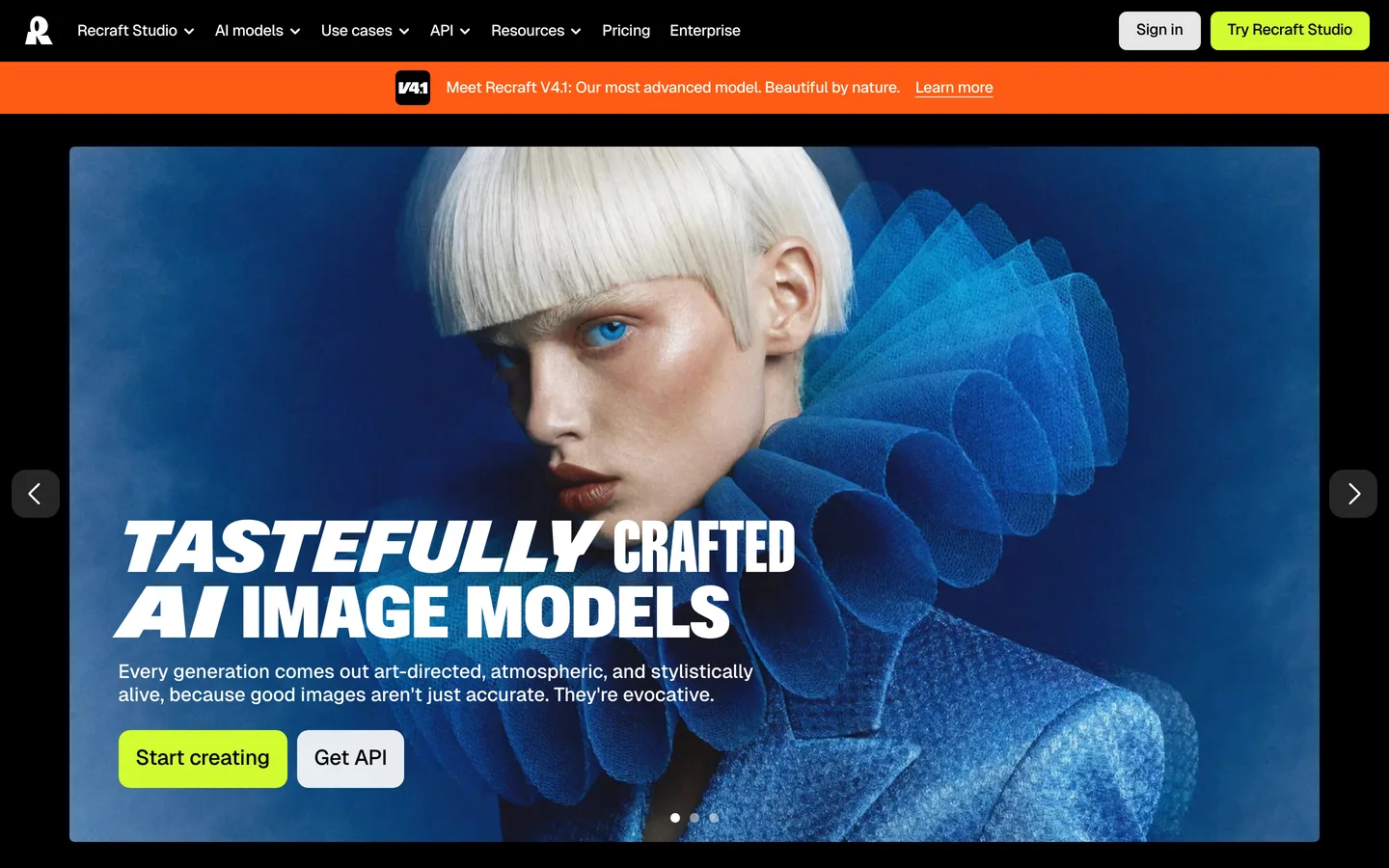
Recraft V3 (internal codename "red_panda"), a 20-billion-parameter model, launched in October 2024. It is one of the few image generators with native SVG and vector output, and it held the top position on the Artificial Analysis leaderboard for over five months.
For clean illustration, icon families, brand-consistent style, and anything that has to end up as vector art, Recraft occupies a lane that none of the generalists have matched.
The pattern#
The 2023 assumption was that a single general model would win, and everyone else would fade. Instead the market split by use case, and each specialist dug in on a category where generic tools underperform:
- Midjourney: editorial and brand aesthetics.
- Flux: open-source and fine-tuned work.
- OpenAI's gpt-image: conversational/casual generation inside ChatGPT.
- Firefly: Adobe-workflow and commercially-safe generation.
- Ideogram: text-in-image.
- Recraft: vector and illustration.
No single tool owns all six. Each owns its lane. The practical consequence for anyone doing image work in 2026 is that you build a small stack of specialists rather than picking one and hoping it is good at everything. The productivity gain from this is real.
A working 2026 stack#
For reference, a cost-effective professional stack:
- Midjourney Standard ($30/mo) for brand/editorial generation.
- Flux 1.1 Pro via Replicate or self-hosted for volume work. Pay per generation, typically under $20/month for light use.
- Adobe Creative Cloud, with Firefly integrated, if you are already paying for Photoshop. Firefly's generative fill inside Photoshop is its most useful feature.
- Ideogram 3.0 or a pay-per-use credit when you need text inside images.
- Recraft for vector/illustration work, subscription tier depending on volume.
Total cost if you are already paying for Creative Cloud: roughly $50-80/month plus usage-based spend on the pay-as-you-go tools. This replaces any "one subscription to rule them all" approach and produces better output for each task.
Further reading#
- Canva AI Image Quality on whether consumer-grade tools like Canva are worth it.
- AI Image Generators Ranked for a more detailed tool-by-tool rundown.
- The Class of 2023 Retrospective for the broader pattern of early wave projects being overtaken by specialists.
Sources#
- Midjourney v7 release notes: https://docs.midjourney.com/hc/en-us/articles/32199405667853-Version
- Black Forest Labs funding: https://venturebeat.com/ai/stable-diffusion-creators-launch-black-forest-labs-secure-31m-for-flux-1-ai-image-generator
- Flux model overview (Wikipedia): https://en.wikipedia.org/wiki/Flux_(text-to-image_model)
- OpenAI native image generation launch: https://openai.com/index/introducing-4o-image-generation/
- GPT-Image model family: https://en.wikipedia.org/wiki/GPT_Image
- Adobe Firefly Image Model 4: https://blog.adobe.com/en/publish/2025/04/24/adobe-firefly-next-evolution-creative-ai-is-here
- Stability AI new investment: https://stability.ai/news/stability-ai-secures-significant-new-investment
- Stability AI company data: https://tracxn.com/d/companies/stabilityai/
- Getty vs Stability UK ruling analysis (Bird & Bird): https://www.twobirds.com/en/insights/2025/uk/stability-ai-defeats-getty-images-copyright-claims-in-first-of-its-kind-dispute-before-the-high-cour
- Mayer Brown analysis: https://www.mayerbrown.com/en/insights/publications/2025/11/getty-images-v-stability-ai
- Ideogram 3.0: https://ideogram.ai/features/3.0
- Recraft V3: https://www.recraft.ai/blog/recraft-introduces-a-revolutionary-ai-model-that-thinks-in-design-language