The question almost every DACH freelancer asks once#
Claude Pro or ChatGPT Plus. Both cost 20 dollars a month. Both speak German. Both are run by US firms billing through Stripe. The differences live in details that are not on the marketing pages: which tier lets you actually set up GDPR-compliant use, what a two-person team really costs, what happens with your data by default, and how good the German output register actually is.
This post runs both licenses through six concrete dimensions that matter for DACH freelancers and small teams. All figures and policies come from the official vendor documents, verified 20 April 2026. Where sources are contradictory or unclear, that is stated explicitly.
1. What do you get technically in April 2026?#
Claude Pro#
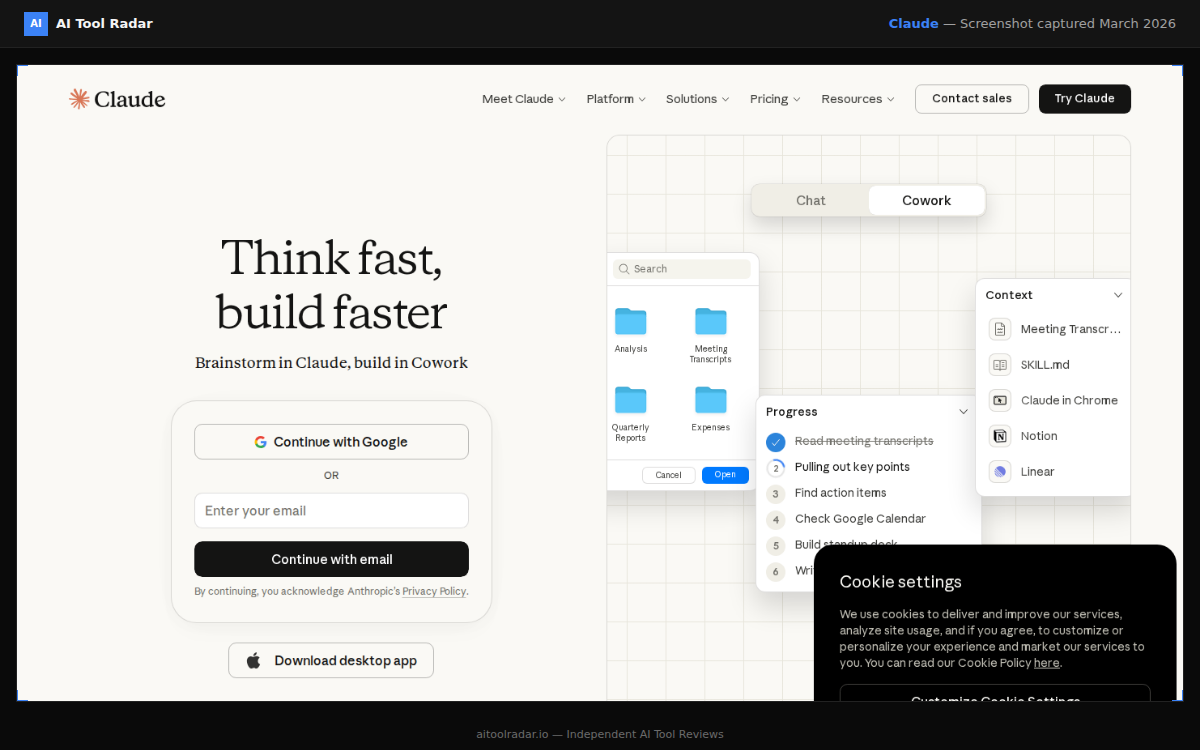
Claude Pro gives you access to Anthropic's full current model lineup: Opus 4.7 (released 16 April 2026), Opus 4.6, Sonnet 4.6 (released 17 February 2026), and Haiku 4.5. On top of that you get Claude Code, Claude Cowork, unlimited Projects, Research features, and Claude for Excel and PowerPoint (beta). The model distribution, context window details, and usage limits are documented in the official model docs and the usage guide.
The chat product has a 200K token context window. Claude Code gives Pro users 1M token context with Opus 4.7/4.6 and Sonnet 4.6. Usage limits run on a rolling five-hour window, with Opus burning through limits three to five times faster than Sonnet. Anthropic deliberately avoids publishing hard message counts — limits are dynamic and scale with actual system load.
ChatGPT Plus#
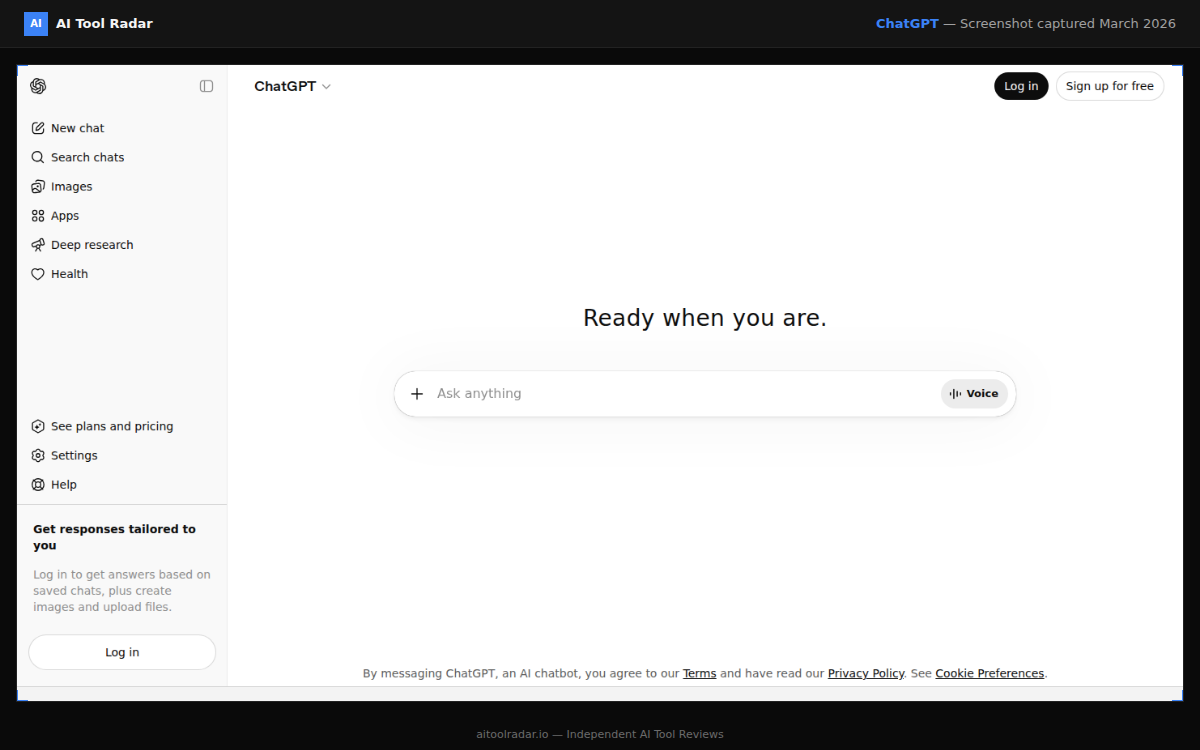
ChatGPT Plus currently gives you access to GPT-5.3 Instant (default), GPT-5.4 Thinking, and partially GPT-5.4 Pro. GPT-5 Instant and Thinking were retired 13 February 2026, GPT-4o was retired 3 April 2026 across all plans, including in Custom GPTs. Details in the official model overview.
You also get GPTs, Projects with up to 25 files per project, Apps, and Company Knowledge for business customers. Hard usage limits for Plus with GPT-5.3/5.4 are not cleanly public right now — official OpenAI help pages mostly document Enterprise limits. In practice, Plus has generous but not unlimited usage, and Plus is explicitly not meant for large-scale production use.
2. What does it cost in EUR with a proper German invoice?#
Subscription prices#
Claude Pro costs 20 US dollars per month on monthly billing, 17 USD per month on annual billing (200 USD yearly total). Verified on claude.com/pricing on 20 April 2026.
ChatGPT Plus costs 20 US dollars per month plus local VAT. For Germany, that typically lands at 23.80 to 24.20 euros per month depending on the current USD/EUR rate. Verified on chatgpt.com/pricing on 20 April 2026.
Team and Business tiers#
This is where the gap widens, and it matters for small DACH teams.
Claude Team: Minimum five seats, 20 USD per seat on annual billing or 25 USD per seat monthly for the standard seat. Premium seats with Claude Code access cost 100 USD per seat annually or 125 USD monthly. Seat types can be mixed. Details in the official Team support article.
ChatGPT Business (renamed from ChatGPT Team on 29 August 2025): Minimum two seats, starting at 20 USD per seat monthly or 15 USD per seat annually after the price reduction in early April 2026. See the Business overview and seat management.
The five-seat minimum on Claude Team is the most important practical difference. For a two- or three-person team, that means either everyone buys Claude Pro individually (no admin or sharing features), or you pay for five seats while only using two or three. ChatGPT Business starts at two seats, which is the realistic entry point for DACH freelancers with an assistant.
Invoicing and reverse charge#
Both vendors process payments through Stripe. Both support storing a German or EU VAT identification number, which activates the reverse charge mechanism for businesses and produces a B2B-compliant invoice without German VAT.
At OpenAI, the EEA contract relationship runs through OpenAI Ireland Limited. The VAT ID is entered directly in the Stripe checkout, with automatic VIES validation. The official guide is explicit.
At Anthropic, the VAT ID is entered in account settings under Billing. Customers who already received invoices without a VAT ID can request a retrospective refund via support@anthropic.com, per the official support article. The specific contracting entity for EU customers is less cleanly documented in Anthropic's docs than in OpenAI's.
In practice, reverse charge works with both. OpenAI's path is the cleanly documented one, Anthropic's is a little more opaque but also works.
3. GDPR: the decisive difference at the 20-dollar tier#
Claude Pro (consumer)#
Anthropic updated its consumer terms on 28 September 2025. Anthropic's official framing is: users must actively consent to the "Help improve Claude" setting in privacy settings, which then allows their data to be stored for five years and used for training. Without active consent, the regular 30-day retention applies.
TechCrunch and other trade press described the change as opt-out: existing users are confronted with the setting on next login and must actively decline. The UI mechanics are an opt-out moment in practice, even though the policy page presents it as an active confirmation of the new setting.
For DACH businesses wanting a clean resolution: check in Claude's privacy settings whether "Help improve Claude" is enabled, and disable if needed. Details in the official training policy.
EU data residency is not available on Claude Pro. Anyone needing Claude with verifiable EU residency must purchase through AWS Bedrock (Frankfurt, Paris, Stockholm) or Google Cloud Vertex AI (EU regions), not through the direct Anthropic API. See Anthropic's data residency docs.
ChatGPT Plus (consumer)#
For ChatGPT Plus, training on customer data is enabled by default. That is not an interpretation, it is cleanly documented on OpenAI's consumer privacy page. Opt-out works via Settings → Data Controls → "Improve the model for everyone" set to Off, or via Temporary Chat, which is excluded from training (details).
EU data residency is not available on ChatGPT Plus. It is explicitly only available for ChatGPT Enterprise, Edu, and the API (Projects). Official announcement: Data Residency in Europe. Anyone working on ChatGPT Plus is sending their data to US servers.
The practical finding for both 20-dollar tiers#
Neither Claude Pro nor ChatGPT Plus offers EU data residency. Both train on customer data in the default setting, though via different mechanics. For real GDPR setup with EU residency, DACH companies need to switch to Enterprise/Edu/API at OpenAI; at Anthropic there is no consumer or Team option with EU residency at all, only the detour via AWS Bedrock or Google Vertex AI.
The deeper GDPR-compliant AI tools post goes through the details on DPAs, subprocessor lists, and Schrems II handling for both vendors. For this comparison, the finding is enough: anyone seriously processing personal data is not cleanly set up with either 20-dollar subscription.
4. German-language quality: what can be backed up?#
This is the point where most comparisons drift into the anecdotal. Hard, official vendor benchmarks specifically for German are thin. What is verifiable:
On Multilingual MMLU, Claude Sonnet 4 and OpenAI o3 both sit at around 88.8 percent and are effectively tied. See OpenAI's simple-evals repository for the numbers. MMLU-ProX is a newer frontier benchmark for 14 languages including German, paper on arxiv.org.
On the WMT24 translation benchmark, Claude 3.5 Sonnet led in nine of eleven language pairs against GPT-4 and Google Translate. The paper comes from the academic translation benchmark context and is regularly cited in comparisons, for example at machinetranslation.com. That applies to 2024-2025 models — the current models Opus 4.7 and GPT-5.4 are only measured in these benchmarks with a lag.
Official Anthropic or OpenAI statements specifically on the German-language performance of their current models are not findable. Both vendors publish multilingual performance as an average across many languages without singling out German.
In practice, German users consistently report in forums and blogs that both models currently produce fluent, grammatically correct German, with different register preferences. Claude tends toward a more neutral, publication-ready register. ChatGPT switches more readily between formal and informal depending on the prompt, which makes it a good fit for messaging and support use cases. That is qualitative impression, not a quantitative claim.
For a defensible decision: test both in parallel for a week on actual work. Comparing summaries of the same German PDF, translated copy, or replies to the same customer emails quickly shows which register fits your style better.
5. Team and workspace features#
Claude Pro and Claude Team#
Claude Pro has unlimited Projects with RAG over uploaded files, custom instructions per account, and project instructions per project. The file upload limit is 30 MB per file, 20 files per conversation, images up to 8000x8000 pixels (official docs).
Claude Team adds enterprise search across the whole organization, single sign-on, domain verification, admin roles, and centralized billing. Claude Cowork as an agentic feature becomes fully usable in Team with premium seats.
ChatGPT Plus and ChatGPT Business#
ChatGPT Plus has Projects with up to 25 files per project and 20 files per message (since 13 February 2026). Custom GPTs are Plus-exclusive on the consumer side with a GPT editor and up to 20 knowledge files per GPT. The file upload limit is 512 MB per file hard, 2 million tokens per text file, 80 uploads per 3-hour window (official FAQ).
ChatGPT Business adds shared GPTs across the organization, Company Knowledge with connectors to Google Drive and SharePoint, admin console, and seat management. SSO is only available in Enterprise.
The practical key differences: ChatGPT's 512 MB per file upload limit is significantly more generous than Claude's 30 MB. Claude's Projects are unlimited in count, ChatGPT's projects have a harmless limit in practice. ChatGPT has Custom GPTs as an established ecosystem with sharing mechanics; Claude Cowork is younger and not yet at the same level of maturity.
6. Which license fits which DACH use case?#
Instead of a generic recommendation, here are the decision signals that follow from the criteria above.
Solo freelancers with a lot of writing#
Anyone mostly producing text — blog, proposals, emails, documentation — will typically benefit from Claude's output quality in German. The context window up to 200K is enough for most PDF summaries and manuscript work. Unlimited projects is a practical plus for research-heavy workflows.
Solo freelancers with a Custom GPT workflow#
Anyone who has already built Custom GPTs as assistants for specific tasks — a ghostwriter GPT with tone-of-voice briefings, a proposal GPT with company briefing — should stick with ChatGPT Plus. The Custom GPT ecosystem is something Claude has not matched in breadth.
Two- to three-person teams#
Here ChatGPT Business is the only real team option at the 20-dollar level because of the two-seat minimum. Claude Team with five seats minimum is 67 percent overhead for a three-person team. Realistic for small DACH teams: ChatGPT Business, or Claude Pro individually per person without admin features.
GDPR-sensitive workflows#
Neither Claude Pro nor ChatGPT Plus fits if personal data is regularly processed. For those cases, ChatGPT Enterprise/API with EU data residency (at higher price points), Claude via AWS Bedrock Frankfurt, or Microsoft 365 Copilot with EU Data Boundary are the viable options. No 20-dollar consumer subscription is built for that use case.
Coding-heavy freelancers#
Claude Pro includes Claude Code, which in developer benchmarks and qualitative feedback through 2026 ranks as a leading agentic coding tool. Anyone working mostly with code and already having a terminal setup gets a mature coding tool with Claude Pro. ChatGPT's code integration runs more through the web client and Codex.
German-language support and content automation#
For high-volume automation — support replies, social drafts, newsletter iteration — neither consumer tier is the right answer, regardless of vendor. API access with clearly defined rate limits and reliable billing metrics is the structurally better path. Consumer subscriptions are designed for personal use, not as production infrastructure.
The structurally most important point#
The license choice is less a license choice with either vendor than an architecture decision. Anyone using Claude Pro or ChatGPT Plus as a consumer subscription is using a product primarily designed for individual users. That applies to usage limits, GDPR setup, team features, and invoicing.
For DACH freelancers writing primarily in German, working with little sensitive data, and staying solo: either works, though Claude Pro tends to produce better German output and custom workflows are more tied to ChatGPT.
For anyone working in a small team or processing personal data: the realistic answer is not Claude Pro versus ChatGPT Plus, but ChatGPT Business starting at 40 USD per month for two seats with a DPA, or a direct jump to API access or the Enterprise tier if there is real compliance need.
Sources#
- Claude Pricing: claude.com/pricing
- Anthropic Consumer Terms Update: anthropic.com/news/updates-to-our-consumer-terms
- Claude Training Policy: privacy.claude.com
- Claude DPA: privacy.claude.com
- Claude Team Plan: support.claude.com
- Claude Usage Limits: support.claude.com
- Claude File Uploads: support.claude.com
- Claude VAT ID: support.claude.com
- Claude Models: platform.claude.com
- Claude Data Residency: platform.claude.com
- ChatGPT Pricing: chatgpt.com/pricing
- ChatGPT Business: help.openai.com
- ChatGPT Seat Management: help.openai.com
- ChatGPT File Uploads: help.openai.com
- GPT-5.3 and 5.4 Details: help.openai.com
- ChatGPT Training Opt-out: help.openai.com
- OpenAI VAT ID: help.openai.com
- OpenAI DPA: openai.com/policies/data-processing-addendum
- OpenAI Consumer Privacy: openai.com/consumer-privacy
- OpenAI EU Data Residency: openai.com/index/introducing-data-residency-in-europe
- Multilingual MMLU: github.com/openai/simple-evals
- MMLU-ProX Paper: arxiv.org
- TechCrunch on Consumer Terms Update: techcrunch.com